
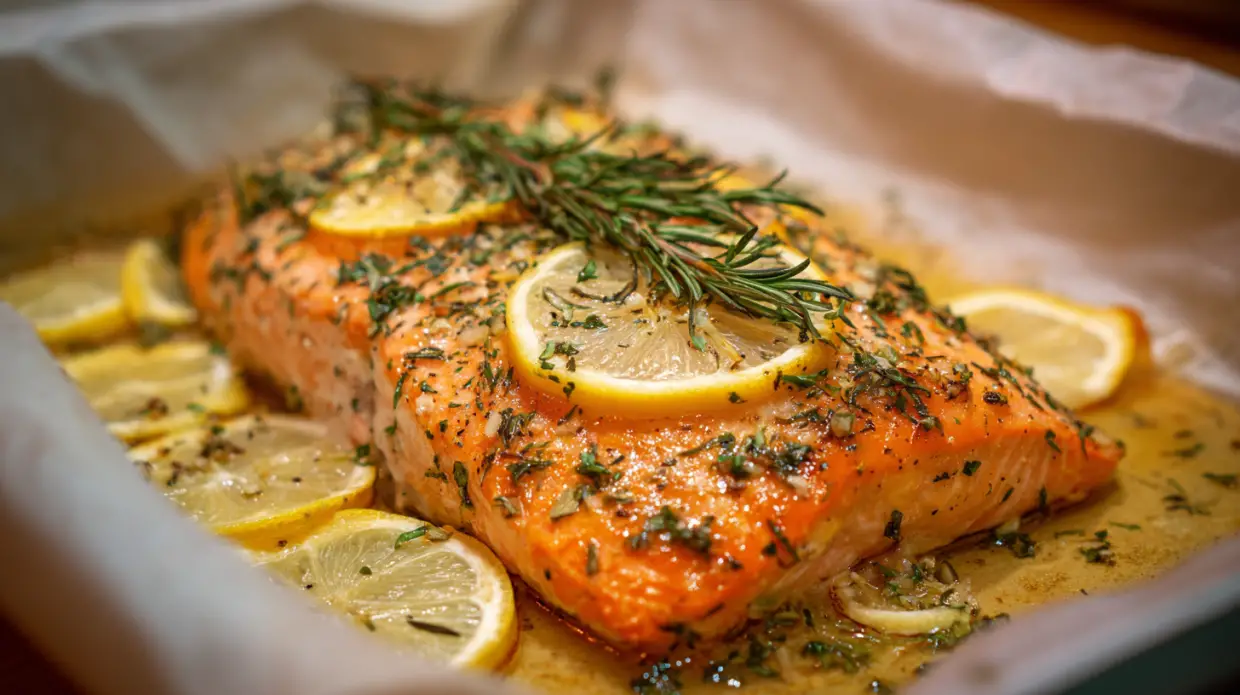
This Lemon Garlic Baked Salmon is a fast, reliable weeknight recipe that yields moist, flaky fish with bright citrus, savory garlic, and a clean herb finish. The technique is simple but precise: pat the salmon dry so seasoning adheres, rub with a measured lemon–garlic–olive oil paste, and bake hot for quick, even doneness. A short rest lets juices redistribute, and a brief optional broil adds restaurant-style caramelized edges. With exact times and temperatures, you’ll get tender salmon that never dries out—ready in about 20 minutes, start to finish.
Ingredients & Measurements
- Yield: 4 servings (based on a 680–720 g / 1½ lb fillet)
- Salmon & Pan
- 1 side salmon (skin-on preferred), 680–720 g / 1½ lb, pin bones removed
- 1 Tbsp olive oil, plus a few drops for the pan
- ½ tsp fine sea salt (or to taste)
- ¼ tsp freshly ground black pepper
- Lemon–Garlic Paste
- 2 tsp finely grated lemon zest (from 1 large lemon)
- 1½ Tbsp fresh lemon juice
- 2 large garlic cloves, very finely minced or microplaned (about 2 tsp)
- 1 tsp Dijon mustard (helps emulsify; flavor stays subtle)
- 1 tsp honey (balances acidity; optional but recommended)
- 1 Tbsp extra-virgin olive oil
- Herbs & Finish
- 1½ Tbsp chopped fresh parsley (or 1 Tbsp dill, or a mix)
- Lemon wedges, to serve
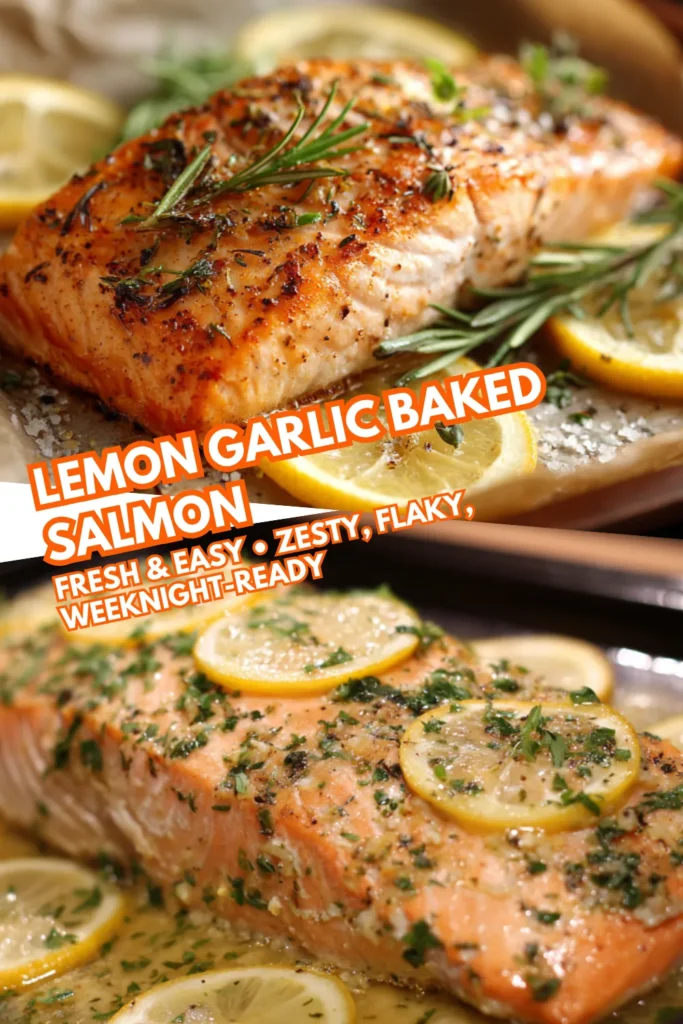
Step-by-Step Instructions
- Heat the oven and prep the pan (5 minutes).
Position a rack in the middle and preheat to 220°C / 425°F. Line a small sheet pan with foil or parchment and rub with a few drops of olive oil to prevent sticking. - Make the lemon–garlic paste (1 minute).
In a small bowl, whisk lemon zest, lemon juice, garlic, Dijon, honey, and 1 Tbsp olive oil until slightly thickened. This paste spreads evenly and clings to the fish so flavors don’t run off during baking. - Dry, season, and coat the salmon (2 minutes).
Pat the salmon very dry with paper towels. Place skin-side down on the pan, rub the surface with 1 Tbsp olive oil, then sprinkle evenly with ½ tsp salt and ¼ tsp pepper. Spoon and spread the lemon–garlic paste over the top in a thin, even layer from end to end. - Bake hot and fast (10–12 minutes).
Transfer to the oven and bake 10–12 minutes for a 1½-lb center-cut fillet, until the thickest part reaches 50–52°C / 122–125°F for medium-rare or 54–57°C / 130–135°F for medium; the flakes should separate easily with a fork but still look juicy. Thin tail pieces will cook slightly faster—aim for even thickness when buying, or fold a thin tail under itself. - Optional broil for caramelized edges (60–90 seconds).
If you like golden spots on the glaze, switch to broil (high) for 1–1½ minutes, watching closely so the garlic doesn’t scorch. - Rest, herb, and serve (3 minutes).
Remove from the oven and rest 3 minutes to let juices settle. Sprinkle with parsley (or dill). Slide a spatula between flesh and skin to lift clean portions, or serve skin-on for crisp bites. Offer lemon wedges at the table for a bright finish.
Cooking Notes
- Why 425°F/220°C? A hotter oven sets proteins quickly, keeping juices inside while lightly caramelizing the lemon–garlic coating. It also shortens the window to perfect doneness.
- Internal temperature targets:
- Medium-rare: 122–125°F (50–52°C)—silky and very moist.
- Medium: 130–135°F (54–57°C)—flaky, still juicy.
Carryover heat rises 2–3°F while resting.
- Fillet thickness matters: A thick center-cut fillet (about 2.5–3 cm / 1–1¼ in) cooks in 10–12 minutes at 425°F. Thinner pieces can be done in 8–10 minutes; start checking early.
- Skin-on advantages: Skin insulates delicate flesh and releases cleanly from foil when the fish is done. If you prefer skinless, lightly oil the foil and don’t broil too long.
- Garlic management: Microplaned garlic disperses evenly but can burn under a long broil. Keep the broil short, or mince very finely for gentler flavor.
- Sheet-pan meal option (same time): Scatter 250 g (9 oz) asparagus tossed with 1 tsp oil + pinch salt around the salmon and bake together; the asparagus will be crisp-tender when the fish is done. Halved cherry tomatoes also roast beautifully in the same window.
- Flavor variations:
- Lemon–Herb Butter: Replace olive oil in the paste with 2 Tbsp melted butter and add 1 tsp chopped thyme; richer mouthfeel, same timing.
- Honey Mustard: Increase honey to 2 tsp and Dijon to 2 tsp; skip the broil or keep it very short to avoid scorching sugars.
- Caper Dill: Add 1 Tbsp chopped capers and swap parsley for dill; finish with an extra squeeze of lemon.
- For frozen salmon (no thaw): Rinse ice glaze, pat dry, and bake at 220°C / 425°F for 8 minutes plain. Remove, spread the lemon–garlic paste, and return for 7–9 minutes more until done. Timing varies with thickness—use temperature cues.
- Air fryer (great for 1–2 portions): 200°C / 400°F for 7–10 minutes, depending on thickness; add the paste before cooking and check at minute 7.
- Sauce idea (quick pan sauce): After removing the fish, pour any tray juices into a small saucepan, add 2 Tbsp white wine and 1 Tbsp butter, simmer 60–90 seconds, whisking until glossy. Spoon over portions.
- Buying salmon: Look for center-cut, even thickness, firm moisture (not wet or mushy), and mild aroma. Wild salmon is leaner and cooks faster; begin checks 2 minutes earlier.
- Leftovers & storage: Refrigerate up to 3 days. Serve cold in salads or flake into warm rice or pasta. To reheat gently, cover and warm at 150°C / 300°F for 8–10 minutes or microwave at 50% power in short bursts—avoid drying.
- Food safety: Remove pin bones before cooking; run fingers along the flesh and pluck with clean tweezers.
Nutrition Facts (per serving)
- Calories: 360 kcal
- Total fat: 21 g
- Saturated fat: 3 g
- Carbohydrates: 2 g
- Dietary fiber: 0 g
- Total sugars: 1 g
- Protein: 38 g
- Sodium: 360 mg
Conclusion
This Lemon Garlic Baked Salmon is a dependable formula for weeknights: dry the fish, coat with a balanced lemon–garlic paste, bake hot for 10–12 minutes, and rest briefly for juicy, flaky portions. The method scales up or down, works with fresh or frozen fillets, and pairs easily with quick-roasted vegetables or a simple salad. Keep an eye on temperature, finish with fresh herbs and lemon, and you’ll plate a bright, elegant dinner with minimal effort—every time.